
URS Kidney Stone Treatment in Agra | Laser Ureteroscopy by Dr. Shwetank Prakash
Call Us when you Need Help!
URS (Ureteroscopy): Procedure, Benefits, and Recovery
Ureteroscopy (URS) is a minimally invasive procedure used to diagnose and treat kidney stones, ureteral strictures, and other urinary tract conditions. It involves passing a thin, flexible or rigid ureteroscope through the urethra and bladder into the ureter to remove or break stones using laser lithotripsy. No incisions are required, ensuring faster recovery and minimal discomfort.
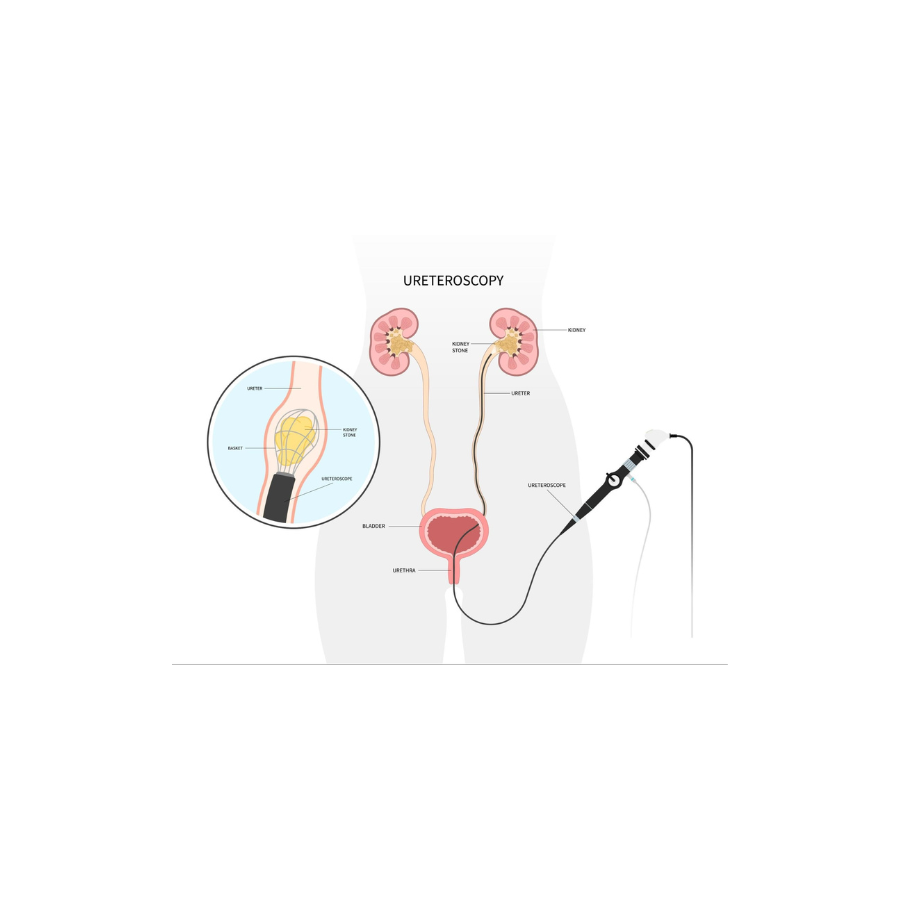
Understanding URS
URS is performed using an endoscopic approach, meaning the procedure is done entirely through the natural urinary tract. A tiny camera at the tip of the ureteroscope provides a detailed view of the urinary system, allowing the surgeon to locate, break, or remove stones.
Two Types of Ureteroscopes Used in URS:
- Flexible Ureteroscope – Used for kidney stones located in the upper ureter or kidney.
- Rigid Ureteroscope – Used for stones in the lower ureter, near the bladder.
Who Needs URS?
URS is recommended for patients with:
- Ureteral stones larger than 5 mm that cannot pass naturally.
- Recurrent kidney or ureteral stones requiring intervention.
- Failed previous treatments, such as ESWL (shock wave lithotripsy).
- Narrowing of the ureter (stricture) needing dilation.
- Blood in urine (hematuria) requiring investigation.
Advantages of URS Over Other Kidney Stone Treatments
- No incisions – Performed through the natural urinary tract.
- Minimally invasive – Less pain and quicker recovery than traditional surgery.
- High success rate – Effective for stones in the ureter and kidney.
- Safe for high-risk patients – Suitable for those with bleeding disorders or obesity.
- Can be performed as a daycare procedure – Most patients can go home the same day.
Step-by-Step URS Procedure
- Anesthesia Administration – General or spinal anesthesia is given for a painless procedure.
- Insertion of Ureteroscope – The scope is passed through the urethra into the bladder and ureter.
- Stone Identification – The surgeon locates the kidney or ureteral stone.
- Stone Treatment Options:
- Laser Lithotripsy – A Holmium laser breaks large stones into smaller fragments.
- Stone Extraction – Small stones may be removed with a tiny basket.
- Laser Lithotripsy – A Holmium laser breaks large stones into smaller fragments.
- Ureteral Stent Placement (if needed) – A temporary stent may be inserted to aid healing.
- Completion and Recovery – The procedure typically takes 30 to 60 minutes, and patients can resume normal activities within a few days.
Recovery After URS
- Most patients can go home the same day.
- Mild burning sensation or blood in urine may occur for a few days.
- Drink plenty of water to flush out any remaining stone fragments.
- Avoid heavy lifting and strenuous activities for a week.
- Ureteral stent removal (if placed) is done in 1-2 weeks.
Potential Risks and Side Effects
URS is a safe and effective procedure, but minor side effects may include:
- Mild discomfort or burning sensation while urinating.
- Temporary blood in urine (resolves within a few days).
- Urinary tract infection (UTI) (rare, but can be treated with antibiotics).
- Ureteral swelling or narrowing (may require stent placement).
Preventing Future Kidney Stones
- Increase water intake (at least 2-3 liters daily).
- Reduce salt and oxalate-rich foods (spinach, nuts, chocolate).
- Maintain a balanced diet with controlled protein intake.
Regular follow-up check-ups to monitor kidney health.
Get expert URS kidney stone treatment in Agra with Dr. Shwetank Prakash,
A specialist in laser ureteroscopy and minimally invasive kidney stone removal.
Quick recovery and no incisions. Book your consultation today!
Why Choose Dr. Shwetank Prakash for Laparoscopic Minimal Invasive Surgery in Agra?
Choosing Dr. Shwetank Prakash for Minimally Invasive laparoscopic surgery in Agra ensures expert surgical care, the latest minimally invasive techniques, and a patient-first approach. Dr. Prakash is a highly experienced laparoscopic and minimally invasive surgeon, with a focus on precision, safety, and faster recovery.
- Faster recovery as minimally invasive techniques reduce downtime
- Minimal scarring due to small incisions leading to better cosmetic outcomes
- Less postoperative pain compared to traditional open surgery
- Lower risk of complications with advanced techniques ensuring safety and precision
Patient-Centric Approach
Dr. Prakash is known for his personalized treatment plans, ensuring every patient receives individualized care. His detailed consultations include:
- A clear understanding of the procedure
- Explanation of potential risks and expected outcomes
- Complete transparency to help patients feel confident about their treatment
- With a proven track record of successful surgeries and high patient satisfaction
- Dr. Shwetank Prakash is a leading expert in gallbladder and Kidney stone removal surgery in Agra.
FAQs
There are many questions about the service, we have selected frequently asked questions about this service. If you do not see your answer, please contact us.
What is minimally invasive laparoscopic surgery?
What are the advantages of laparoscopic surgery over traditional open surgery?
Smaller incisions and minimal scarring
Reduced pain and discomfort
Shorter hospital stay and faster recovery
Lower risk of infections and complications
Quicker return to daily activities
What types of conditions can be treated with laparoscopic surgery?
Gallbladder removal (cholecystectomy)
Hernia repair
Appendix removal (appendectomy)
Kidney stone and prostate surgery
Weight loss (bariatric) surgery
Gastrointestinal and colorectal surgeries
Is laparoscopic surgery safe?
How long does it take to recover from laparoscopic surgery?
Will I have visible scars after laparoscopic surgery?
Is laparoscopic surgery painful?
Do I need to stay overnight in the hospital after laparoscopic surgery?
What precautions should I take after laparoscopic surgery?
Follow the prescribed diet and medications
Keep the incision area clean and dry
Attend follow-up appointments for recovery assessment
Who is a good candidate for laparoscopic surgery?
Why Choose Us?
Are you having health problems? Contact us today!
Address Business
Contact With Us
Call Us 24/7: 81 22 22 22 22